An arrow spin tester supports a shaft while you rotate it and look for visible wobble. For people assembling or maintaining arrows at home, it provides a useful place to observe a shaft and its installed components.
However, visible wobble is not automatically proof that the shaft itself is bent. An installed component, the contact surface, or the way the arrow sits on the supports may affect what you see.
There is also a difference between observing rotation and measuring deviation. A simple spinner should not be assumed to verify a manufacturer’s numerical straightness specification.
This guide compares five products using published manufacturer information. It is not a hands-on accuracy ranking, and none of these tools replaces the arrow manufacturer’s inspection requirements.
Amazon shopping note: The links open Amazon.com searches, not verified in-stock listings. These specialist tools may have limited Amazon availability. Confirm the exact model, seller, package contents, and support arrangements; use the manufacturer or an authorized archery dealer if the correct product is unavailable.
Five Products at a Glance
Table of Contents
| Product | Published functions | Main reason to compare |
|---|---|---|
| Pine Ridge Arrow Inspector | Visual spin inspection | A dedicated spinner without a listed squaring attachment |
| Last Chance Archery Square Up | Spinning and squaring | Combined tool with an adjustable diamond squaring bar |
| Mod Archery Arrow Spin Tester & Squaring Device | Spinning, squaring, visual runout indication | A reference indicator and included consumables |
| 3Rivers Arrow Spin Tester/Square Device | Spinning and abrasive squaring | Published dimensions and replaceable sanding discs |
| Last Chance Revolution Arrow Tuner | Spinning, dial indication, squaring, component tuning | A larger station with a numerical indicator |
Features describe different approaches. They do not establish which product produces the most accurate result.
1. Pine Ridge Archery Arrow Inspector
 A dedicated option for visual spin checks
 A dedicated option for visual spin checks
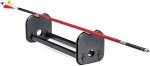
Pine Ridge describes the Arrow Inspector, model 2500, as a tool for checking shaft straightness and component alignment. Its published construction includes precision-cut aluminum wheels and low-friction, machine-cut steel axles. Pine Ridge Archery
It is worth comparing if you mainly want a place to rotate arrows and observe them, rather than another preparation station with abrasive attachments.
Before buying, ask about support spacing, permitted shaft dimensions, and clearance for your finished arrows. The product description does not provide a numerical measurement system for certifying shaft straightness.
Also confirm how the support wheels are maintained and whether replacement parts are available.
Why compare it: A dedicated visual inspection tool with published support-wheel construction.
What to check: Shaft support, finished-arrow clearance, base stability, and maintenance.
2. Last Chance Archery Square Up
A combined spinner and squaring tool
 A combined spinner and squaring tool
Last Chance Archery lists the Square Up as an arrow spinner and squaring device with an adjustable diamond squaring bar. Its instructions describe removing the diamond hone using thumb screws when converting the tool to spinner use.
The package listing includes mounting hardware.
This makes it a candidate when you want both functions in one bench tool. If you already own a squaring device, consider whether the extra function adds value or duplicates existing equipment.
Confirm the current package contents and the setup needed for switching tasks. Broad compatibility language should still be checked against your exact shaft and installed components.
Why compare it: Spinning and squaring functions with an adjustable diamond bar.
What to check: Conversion between tasks, mounting requirements, clearance, and replacement-bar availability.
Amazon.com : Last Chance Archery Mathews Finger Set : Sports & Outdoors
3. Mod Archery Arrow Spin Tester & Squaring Device
An option with a visual reference indicator
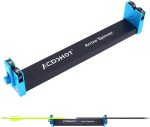 Mod Archery lists a tabletop spinner, a squaring post with pre-installed sandpaper, and a magnetic runout indicator. Its package also includes a silver marker, additional sandpaper, and replacement white indicator stickers.
Published overall dimensions are 17 × 3.25 × 3.25 inches.
The included indicator is worth examining if you want a visible reference beside the rotating component. Do not assume that a visual reference provides a calibrated numerical reading.
Check how the indicator is positioned and whether your completed arrows have sufficient clearance. Include replacement abrasive sheets and indicator supplies in the ownership cost.
Why compare it: A visual reference accessory and a defined starter package.
What to check: Indicator operation, support arrangement, bench space, and consumables.
4. 3Rivers Archery Arrow Spin Tester/Square Device
A compact combined tool with published dimensions
3Rivers describes its own-brand spinner as an aluminum-alloy tool with stainless-steel bearings and an included shaft-polishing assembly using adhesive sandpaper.
It lists approximate dimensions of 11¾ × 2¼ × 1½ inches and an approximate weight of 15 ounces. Replacement sanding discs are listed separately.
Those measurements help when comparing bench and storage space. They do not establish the maximum arrow length or finished-component clearance.
Confirm that your listing is the base Spin Tester/Square Device rather than a different bundle. Ask which shaft materials and preparation tasks the abrasive attachment supports.
Why compare it: Published dimensions and a replaceable abrasive system.
What to check: Exact bundle, support spacing, shaft compatibility, and replacement-disc costs.
5. Last Chance Archery Revolution Arrow Tuner
A larger station for buyers who need dial indication
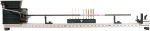 A larger station for buyers who need dial indication
The Revolution Arrow Tuner combines built-in spinners, a dial indicator, squaring functions, and component-tuning features. Last Chance describes an indicator that reads to 0.001 inch.
The manufacturer lists tuning compatibility with three- and four-blade heads; its page describes two-blade compatibility as a future addition. Last Chance Archery
Treat the stated indicator increment separately from the accuracy of the complete measurement setup. Repeatability, contact position, support conditions, and setup procedure all matter.
This is worth comparing if you need more than visual observation. Otherwise, the size and additional features may exceed your intended use.
Why compare it: An integrated station with a numerical indicator.
What to check: Measurement procedure, calibration guidance, current component compatibility, footprint, and replacement parts.
Amazon.com: Last Chance Archery 1202797 Revolution Arrow Saw Multicolor : Sports & Outdoors
How to Choose an Arrow Spin Tester
Decide Whether You Need Observation or Measurement
 Decide Whether You Need Observation or Measurement
Start by defining the question you want the tool to answer. Are you looking for obvious wobble, checking an installed component, or recording numerical readings?
A visual spinner can help you observe rotation. A numerical check requires suitable measuring equipment and a defined procedure.
If you want to assess a published straightness tolerance, ask the shaft manufacturer how that tolerance is measured. Do not assume that any spinner recreates the manufacturer’s inspection method.
Match the Supports to Your Arrows
 Record the shaft model, material, outside diameter, finished length, and installed components.
Ask the tool manufacturer whether its support arrangement suits that combination. Check whether the contact points can sit on appropriate shaft surfaces without interfering with wraps or other features.
Short arrows and crossbow bolts may create different support requirements. A general claim that a tool checks arrows should not be treated as confirmation for every length and configuration.
Confirm Fletching and Component Clearance
 Consider the whole arrow, not only the bare shaft. Vanes, feathers, nocks, outserts, and points need room to rotate without contacting the tool or bench.
Check the distance between the supports and the height above the work surface. Ask for a demonstration with similar components if the dimensions are unclear.
For exposed sharp points or blades, follow the component and tool instructions for handling and positioning. Plan clear working space around the rotating assembly.
Keep the Tool and Contact Surfaces Clean
Inspect the supports and shaft contact areas before interpreting a result. Debris or an uneven contact surface can interfere with a consistent setup.
Follow the manufacturer’s cleaning guidance. Do not assume every bearing or roller should receive the same cleaner or lubricant.
Ask how worn or damaged supports are identified and replaced. A useful tool should have clear maintenance instructions and accessible support.
Investigate Wobble Before Altering Components
 A visible change during rotation tells you that further investigation is needed. It does not, by itself, identify the cause.
Record which arrow was checked, its configuration, and where the movement was observed. Follow the shaft and component manufacturers’ diagnostic guidance or consult a qualified archery shop.
Do not assume that sanding, bending, heating, or re-gluing is the appropriate response. A combined tool’s preparation feature is not authorization to alter every shaft or component.
Compare the Complete Ownership Cost
 Include delivery, mounting supplies, replacement bearings or rollers, abrasive sheets, indicator accessories, and any separate measuring equipment.
For a combined station, identify which tools it would replace or duplicate. If you only want occasional visual checks, compare the simpler options with the larger integrated station.
Check return conditions and local support before importing. Replacement supplies and service availability can affect value more than a small difference in the initial price.
Does a Smooth Spin Prove an Arrow Is Safe?
 No. Smooth-looking rotation does not establish that a shaft and all its components are free from damage.
Easton instructs users to inspect each arrow shaft, nock, and other components before every shot, including the first shot with a new arrow, and warns never to shoot a damaged arrow. Easton Archery
Follow the inspection method for your exact arrow material and model. Keep uncertain arrows out of use while seeking appropriate assessment.
Spin checking belongs within that wider inspection process. It should not become a shortcut around it.
Which Arrow Spin Tester Should You Compare First?
 For dedicated visual checks, begin with the Pine Ridge Arrow Inspector. Compare the Square Up, Mod Archery, and 3Rivers tools if you also need their preparation features.
Consider the Revolution Arrow Tuner when numerical indication and its additional supported functions justify the extra equipment.
Choose around your actual arrows, workspace, and checking method. Clear compatibility information and repeatable setup matter more than broad promises about improved arrow flight.