A child’s first archery target should suit the bow they actually shoot. An impressive target designed for powerful hunting equipment is not automatically a good match for a light beginner bow.
The buying decision involves more than stopping arrows. Consider whether the child’s arrows will penetrate and remain in the target, whether removal is manageable, and whether the aiming face suits their present accuracy.
This guide compares five youth-oriented targets using manufacturer information. These are researched options, rather than hands-on test winners. For very light bows, obtain confirmation for the exact bow-and-arrow combination before buying: the reviewed pages do not establish a universal minimum draw weight.
Affiliate disclosure: As an Amazon Associate, I earn from qualifying purchases.
The Amazon links below are search links. Confirm the exact product, seller, specifications, and availability before ordering.
Quick Comparison
Table of Contents
| Target | Main reason to compare it | Published draw-weight information |
|---|---|---|
| Morrell NASP Youth | Home scoring practice | Current manufacturer page: 45 lb and under |
| BLOCK GenZ | Youth-oriented layered foam | 40 lb and under |
| Morrell Youth Archery Arcade | Multiple animal aiming graphics | Current manufacturer page: 45 lb and under |
| Delta McKenzie TuffBlock | recommends it for low-poundage | bow-speed limit of less than 250 FPS. |
| BIGshot Youth 36-Inch NASP Range | Larger youth range format | No numerical limit found on reviewed page |
These are maximum ratings where stated, not proof of reliable performance at every lower draw weight. Match the actual listing and supplied instructions.
1. Morrell NASP Youth — Best for Home Scoring Practice
The Morrell NASP Youth Field Point Bag Archery Target is a useful starting point for families seeking a youth-specific bag.
Morrell lists two shooting sides, dimensions of 27 × 10 × 27 inches, an internal frame, and a replacement cover. Its current page specifies bows of 45 pounds and under and field points only.
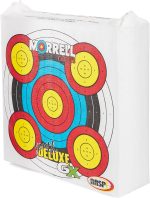 A particularly important restriction is easy to overlook: Morrell labels this model not for commercial or school use. Its intended role includes practicing at home for the NASP program; that does not make it an institutional range target.
Morrell also advises against outserts and field points larger than the arrow shaft. Check those details before pairing it with existing arrows.
Advantages: Youth-focused design and an identified replacement cover.
Considerations: Home-use restriction and specific arrow-component limitations.
Best for: Families wanting a bag target for supervised practice and scoring drills.
2. BLOCK GenZ — Best Layered-Foam Option
The BLOCK GenZ offers a different format for buyers comparing bag targets with layered foam.
FeraDyne describes an open-layered construction intended to make arrow extraction easier. The manufacturer specifies bows with draw weights of 40 pounds or less and lists compatibility with field tips, fixed-blade broadheads, and expandable broadheads.
The product page offers GenZ and GenZ XL selections. Confirm which version the seller supplies, along with its dimensions and approved shooting surfaces. Similar names do not guarantee the same size.
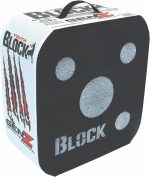 For a young beginner, broader tip approvals should not drive the purchase. Choose the child’s practice arrows with their instructor and evaluate ordinary target use first.
Advantages: Youth-specific foam format and published tip compatibility.
Considerations: The maximum rating does not establish a minimum suitable bow weight; verify the selected version.
Best for: Families who prefer layered foam and can confirm compatibility with their light bow.
3. Morrell Youth Archery Arcade — Best for Varied Aiming Graphics
The Morrell Youth Archery Arcade gives young archers a choice of animal illustrations.
Its current manufacturer page lists more than 20 animal graphics across two shooting sides, a 27 × 10 × 27-inch format, and field-point-only use. Morrell describes it as a youth target for bows of 45 pounds and under. It also excludes outserts and field points wider than the arrow shaft.
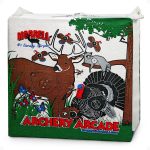 Multiple graphics can give a practice session variety. Select an aiming area appropriate to the child’s accuracy rather than making the smallest illustration the immediate challenge.
Some retailer listings describe a 30-pound limit. Confirm the rating on the exact supplied product instead of applying the current manufacturer’s higher number to a different version. walmart.com
Advantages: Several aiming choices and two usable shooting sides.
Considerations: Rating differences across listings and field-point restrictions.
Best for: Young archers who enjoy changing aiming areas during supervised practice.
4. Delta McKenzie TuffBlock — Best Alternative for Low-Poundage Practice
The Delta McKenzie TuffBlock is another option for families choosing a target for a young beginner.
Delta McKenzie specifically recommends it for low-poundage bows under 40 pounds and identifies younger archers as its intended audience. This makes it a relevant alternative to investigate for a light youth setup. Delta McKenzie Targets
Sportsman’s Warehouse lists dimensions of 24 × 24 × 12 inches and a bow-speed limit of less than 250 FPS. Confirm those specifications against the exact product’s packaging and instructions before use.
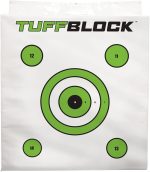 For an especially light bow, ask the manufacturer about your child’s arrows and draw weight. The published upper limit does not establish a minimum suitable poundage or guarantee reliable arrow retention with every beginner setup.
Advantages: Manufacturer explicitly recommends it for low-poundage bows and younger archers.
Considerations: Verify the exact dimensions, speed limit, approved arrow tips, and suitability for very light bows.
Best for: Families comparing a straightforward target for supervised beginner practice.
5. BIGshot Youth 36-Inch NASP Range — Best Larger Option to Investigate
The BIGshot Youth 36-Inch NASP Range is worth comparing when a larger youth-oriented target is the priority.
BIGshot positions it for youth and scouting programs and archers preparing for JOAD or NASP events. The product page lists dimensions of 39 × 13 × 32 inches and item code 2050. It recommends bullet-point field tips for longevity.
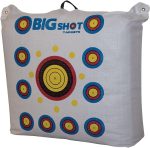 However, the reviewed page does not publish a numerical draw-weight range. This is a conditional option: ask BIGshot to confirm compatibility with the child’s actual bow, arrows, and intended distance before ordering.
Also confirm the delivered face size and applicable program requirements. The product name alone is not a complete specification.
Advantages: Larger dimensions and an explicitly youth-oriented purpose.
Considerations: Missing numerical rating; check arrow restrictions and mounting requirements directly.
Best for: Buyers willing to verify a larger range-style target with the manufacturer.
How to Choose a Target for a Low-Poundage Bow
Start With the Actual Equipment
Write down the bow model, its current setting, the child’s approximate draw length, and the arrow specifications. Include shaft material, diameter, point type, and any external components.
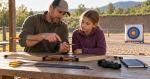 Send this information to the target manufacturer or a qualified archery shop. Ask whether the combination is suitable for reliable penetration, retention, and removal. A statement such as “works with youth bows” is less useful than confirmation addressing your equipment.
For a recurve, ask an instructor or shop to check the weight at the child’s draw length. Do not assume the number printed on the bow describes what every child draws.
Distinguish Maximum Rating From Low-Energy Suitability
A target approved up to 40 pounds does not necessarily perform equally well with every bow below that figure. The upper limit answers only part of the compatibility question.
For an especially light setup, ask about minimum practical requirements or arrange a supervised trial. If arrows repeatedly bounce out or fail to stay in the face, stop and investigate the equipment match with an instructor. Increasing draw weight should not be the automatic response.
Choose an Appropriate Aiming Area
 Compact targets are convenient to move, but size should follow the beginner’s current ability. Consider how easily the child can identify the intended aiming point and whether their normal groups fit comfortably within the approved shooting area.
A larger face cannot substitute for a backstop. Budget for the full practice arrangement before spending everything on the target itself.
Check Removal and Stability Together
Easy-removal claims are worth considering, but the practical experience depends on the arrow and target combination.
During an approved trial, have an adult evaluate whether extraction can be controlled without excessive effort or target movement. Set up the target according to its instructions and use an appropriate stand when required. Never assume that a carry handle also serves as an approved hanging point.
Compare Maintenance Costs
Look for replacement covers or other manufacturer-supported parts. Confirm that a cover matches the exact target, rather than choosing by brand alone.
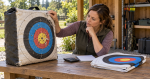 A replacement cover refreshes the exterior; it does not automatically restore worn internal material. Inspect stopping performance and follow the manufacturer’s guidance on repair or replacement. Covered storage and regular checks make ownership easier to manage.
Build the Practice Setup Before Shooting
NASP’s instructor guidance emphasizes a controlled range, clear lines, and a safe shooting direction. It also warns that arrow-resistant curtains are not arrow-proof. A target purchase therefore needs to be part of a complete range plan.
Have a qualified instructor assess an unfamiliar home location. Account for access routes, neighboring property, people, pets, and the area behind and beside the target. If the space cannot safely contain misses or pass-throughs, use a designated range.
Keep everyone on one shooting line and stop all shooting before anyone retrieves arrows. Beginners should shoot under attentive adult supervision and follow the instructor’s commands. Never dry-fire a bow.
Frequently Asked Questions
Will these targets work with a 10-pound bow?
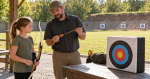 The reviewed manufacturer pages do not establish that exact claim for all five options. Ask about the complete bow-and-arrow setup and arrange a supervised trial when possible.
Can a child use an adult archery target?
Possibly, if the manufacturer confirms suitability. An adult target’s high maximum rating alone does not establish compatibility with a light youth bow.
Is a bag or foam target better?
 There is no universal winner. Compare confirmed compatibility, removal effort, face size, stability, and maintenance rather than choosing solely by construction.
Are suction-cup arrows suitable?
Do not assume so. Match toy or suction-cup arrows to the equipment specifically designed for them; the targets here should not be treated as universal toy-arrow surfaces.
Does “NASP” in the name mean it is suitable for a school?
No. Verify the target’s intended use and the program’s requirements. Some home-practice products have explicit institutional-use restrictions, including the Morrell NASP Youth reviewed here.
Which Target Should You Compare First?
Begin with the child’s equipment and intended practice location. For home scoring drills, investigate the NASP Youth; for foam construction, compare GenZ. The Arcade offers varied graphics, while Deluxe GX and BIGshot provide larger formats to assess.
The best youth archery target is the one confirmed to work with the child’s actual setup and supported by a properly planned range. Buy for that combination, then let the child develop accuracy at a manageable distance.